Thursday, February 3, 2011

PORTFOLIO ASSESSMENT

1) Serial killings (compare and contrast)
 Monday, December 20, 2010

This post tells us about both articles written in Ny times and Ny daily news. This ARTICLE IS ABOUT serial killing. Why I chose this article as one of my best was that we can easily compare the both articles and see which one is more detailed.

2) FASHION OF 1961

Monday, January 3, 2011


This is about fashion if 1961, this ARTICLE will tell u about how people dressed up in 1961’s.As I was amazed and delighted by the fashion of 1961; I decided to choose this as my best post.

3) House Chores
Monday, December 13, 2010

This blog is about people who don’t like to do house chores. I am one of them. I also hate to do house chores. Hence I am with all those people who hate scrubbing, moping, laundry and washing dishes.

4) Geological Wonders
Wednesday, January 19, 2011

This blog is about different geological wonders in the world, a look at some of the geological wonders that this wonderful earth holds. Why I chose this blog as one of best was that because every country has its special specialty that amazes everyone.


5) Underwater Sculptures
Thursday, January 13, 2011

This blog is about a famous underwater museum (the Cancun Marine Park ) in  Mexico. The sculptures are based on members of the local community. The Cancun Marine Park is one of the most visited museum in the world with over 725, 000 visitors each year. This whole phenomena can mesmerize anyone.


My biggest strength is that I can talk about any topic on hand. As one can see that there are a lot of variations in my blogs. My biggest weakness is that I don’t go into detail or explain the topic fully. My blogs represent me as the way I think and feel and act. As a writer I feel one should be able to write about anything.

Friday, January 21, 2011

THE NATURE OF EARTH

 Pamukkale (Turkey)


In Turkish the name literally means Cotton Castle and it is easy to see why it was given that name. Yet this geological wonder is also the site of the ancient city of Hierapolis and over the centuries the two have seemed to come together, almost merged into one. In fact some of the old tombs in the city's necropolis have become part of landscape. The site itself is a series of travertines and hot springs. The travertines here have a concentric appearance and are almost sheer white giving the area an ethereal appearance. The hot springs precipitate calcium carbonate at their mouths and produce the strange almost organic looking structures.


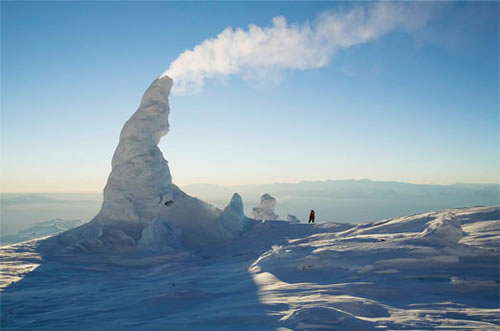
Ice Towers of Mount Erebus (Antarctica)


Mt. Erebus is one of the largest active volcanoes on Earth. It reaches nearly 4 km above sea level, and is renowned in volcanological circles for its persistently active lava lake, which is sited in the summit crater. Erebus summit have created an intricate system of ice caves all over the mountain.
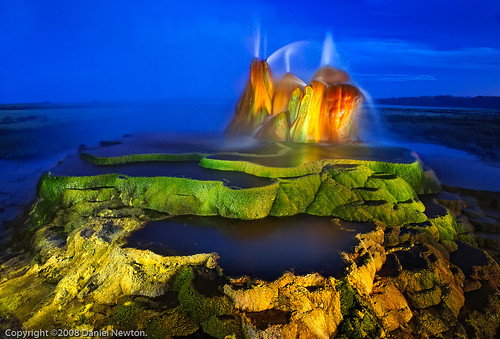
 Fly Geyser (Nevada, US)

These look as if they were taken on another planet, or at least on the set of a new and very expensive science fiction movie. Yet these pictures are of the Fly Geyser which is very much of planet earth . It is a little seen phenomenon as the land upon which it sits is private. It can be seen from State Road 34 but unless you have permission the view from a distance is all you should attempt
Enchanted Well - Chapada Diamantina National Park (Brazil)

 Poço Encantado, or Enchanted Well, is located in the Chapada Diamantina National Park in Bahia state, approximately 400 kilometres inland from Salvador, the capital city of Bahia. This giant sunken pool is 120 feet deep and the water is so transparent the rocks and ancient tree trunks are visible on the bottom. When the sun is just right, light comes through a crevice and creates a blue reflection on the water.

Wulingyan, Hunan (China)


The Hunan region is full of dramatic landscapes and the magnificent Wulingyan is one of their biggest attractions. This geological wonder is made up of over 3000 limestone karsts. There are scenic waterfalls and some of Asia's biggest limestone caves.

The Valley of the Moon (Argentina)


 Ischigualasto, meaning “the place where you put the moon” is a remote valley in Argentina. It is studded with geological formations left by wind erosion, amazing standing stones and boulders that are so rounded they look like enormous marbles.

Wednesday, January 19, 2011

GEOLOGICAL WONDERS

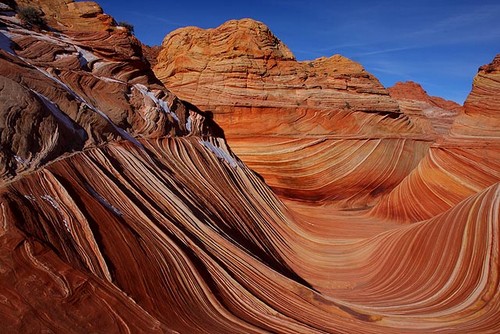
The Wave (between Arizona and Utah - USA)

A red-rock stunner on the border of Arizona and Utah, The Wave is made of 190-million-year-old sand dunes that have turned to rock. This little-known formation is accessible only on foot via a three-mile hike and highly

Antelope Canyon (Arizona - USA)

The most visited and photographed slot canyon in the American Southwest, the Antelope Canyon is located on Navajo land near Page, Arizona. It includes two separate, photogenic slot canyon sections, referred to individually as Upper Antelope Canyon --or “The Crack”-- and Lower Antelope Canyon --or “The Corkscrew.”

Great Blue Hole (Belize)


  The Great Blue Hole lies approximately 60 miles off the mainland out of Belize City. A large, almost perfectly circular hole approximately one quarter of a mile (0.4 km) across, it’s one of the most astounding dive sites to be found anywhere on earth. Inside this hole, the water is 480 feet (145 m) deep and it is the depth of water which gives the deep blue color that causes such structures throughout the world to be known as "blue holes." 


Danxia Landform (China)

This unique geological phenomenon, known as a 'Danxia Landform', can be seen in several places in China. This example is located in Zhangye, Gansu Province. Danxia, which means "rosy cloud", is a special landform formed from reddish sandstone that has been eroded over time into a series of mountains surrounded by curvaceous cliffs and many unusual rock formations.


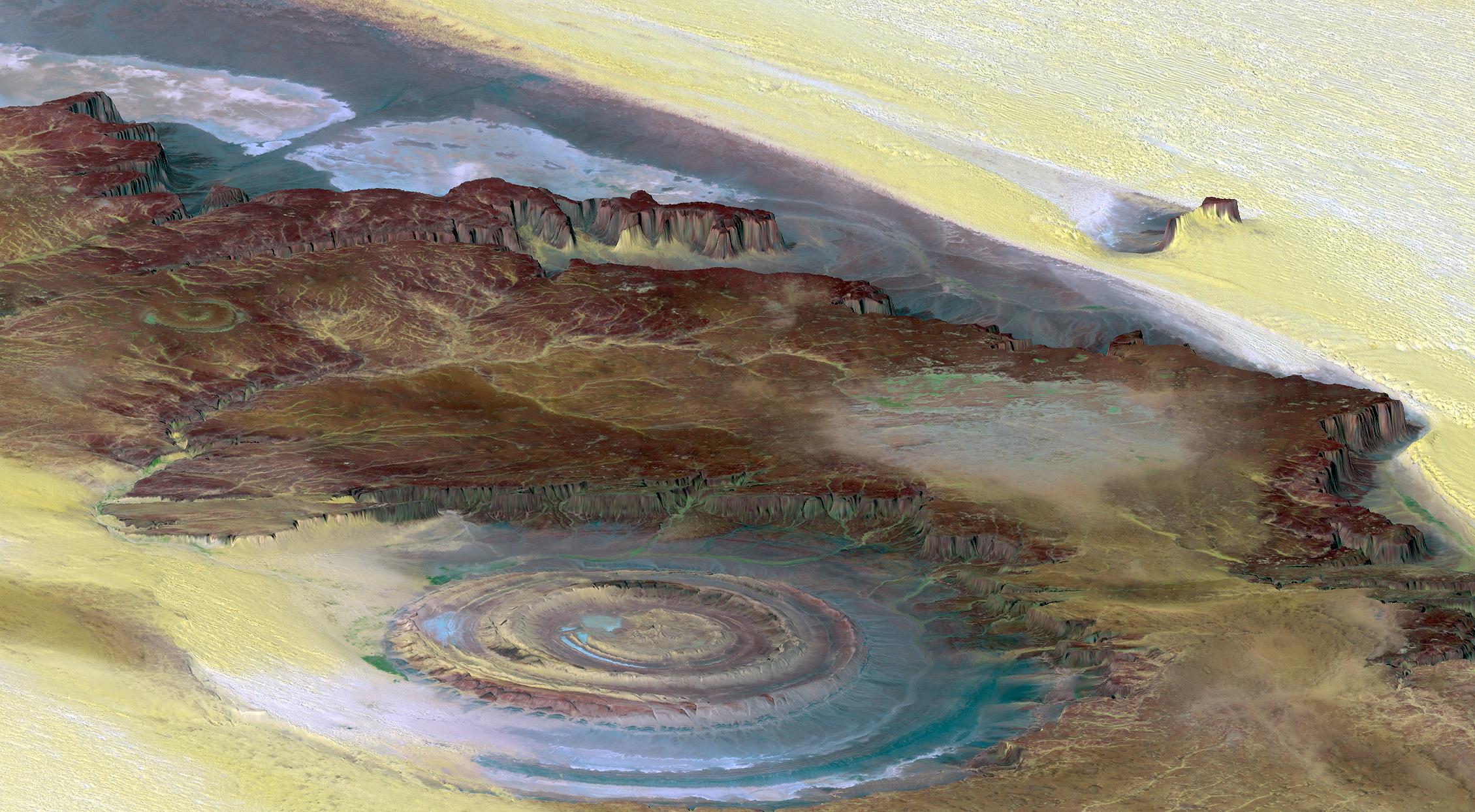
Eye of the Sahara (Mauritania)

This spectacular landform in Mauritania in the southwestern part of the Sahara desert is so huge with a diameter of 30 miles that it is visible from space. The formation was originally thought to be caused by a meteorite impact but now geologists believe it is a product of uplift and erosion. The cause of its circular shape is still a mystery.

Sunday, January 16, 2011

WORLD'S SCARIEST ROADS

The Death Road (Bolivia)

The North Yungas Road, also known as The Death Road, is a 61 to 69 km road leading from La Paz to Coroico (Bolivia's capital, to the Amazon region) in the Yungas region of Bolivia. It is legendary for its extreme danger.

Guoliang Tunnel Road (China)

The road in Taihang mountains was built by local villagers: it took five years to finish the 1,200 metre long tunnel which is about 5 meters high and 4 meters wide. Some of the villagers died in accidents during construction.

Sichuan-Tibet Highway (China)

In China, the number of deaths caused by car accidents has nearly doubled in the past 20 years. The Sichuan-Tibet Highway, a high-elevation road between Chengdu and Tibet where landslides and rock avalanches are common, is undoubtedly part of the problem. The 2,412km long Sichuan-Tibet Highway starts from Chengdu of Sichuan on the east and ends at Lhasa of Tibet on the west. The road stretches into Lhasa passing Ya’an, Garze and Chamdo. Sichuan-Tibet highway traverses 14 high mountains which average 4,000-5000m.

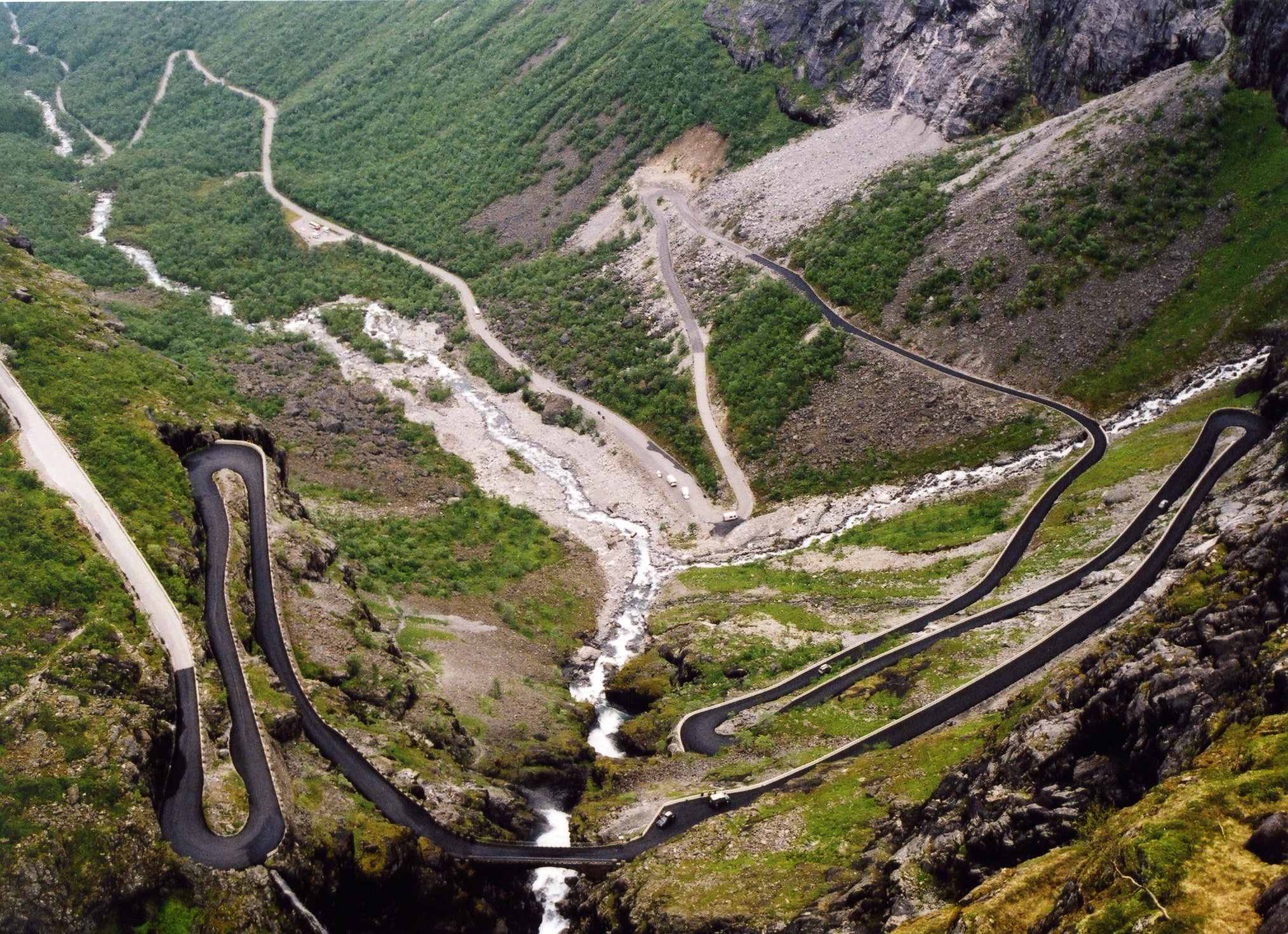
Trollstigen (Norway)

 Trollstigen is a mountain road in Rauma, Norway, part of Norwegian National Road 63 connecting Åndalsnes in Rauma and Valldal in Norddal. A popular tourist attraction due to its steep incline of 9% and eleven hairpin bends up a steep mountain side, the road up is narrow with many sharp bends, and although it has been widened in recent years, vehicles over 12.4 meters long are prohibited from driving the road.
Stelvio Pass Road Trollstigen(Italy)

This road is  located in the Italian Alps, near Bormio and Sulden, 75 km from Bolzano, close to Swiss border. While it might not be as risky as other deadly routes, it's certainly breathtaking.

Saturday, January 15, 2011

WORLD'S CREATIVE BUILDINGS

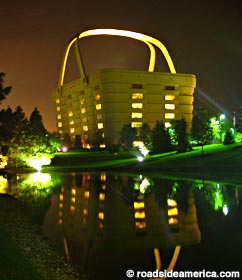
The Basket Building (United States)

Dave Longaberger, Founder of The Longaberger Company, has been built Home Office into a giant basket to house the entire corporate offices of the company. Dave believed the idea was one of his best and would draw attention to the company, while simultaneously helping to build our brand.

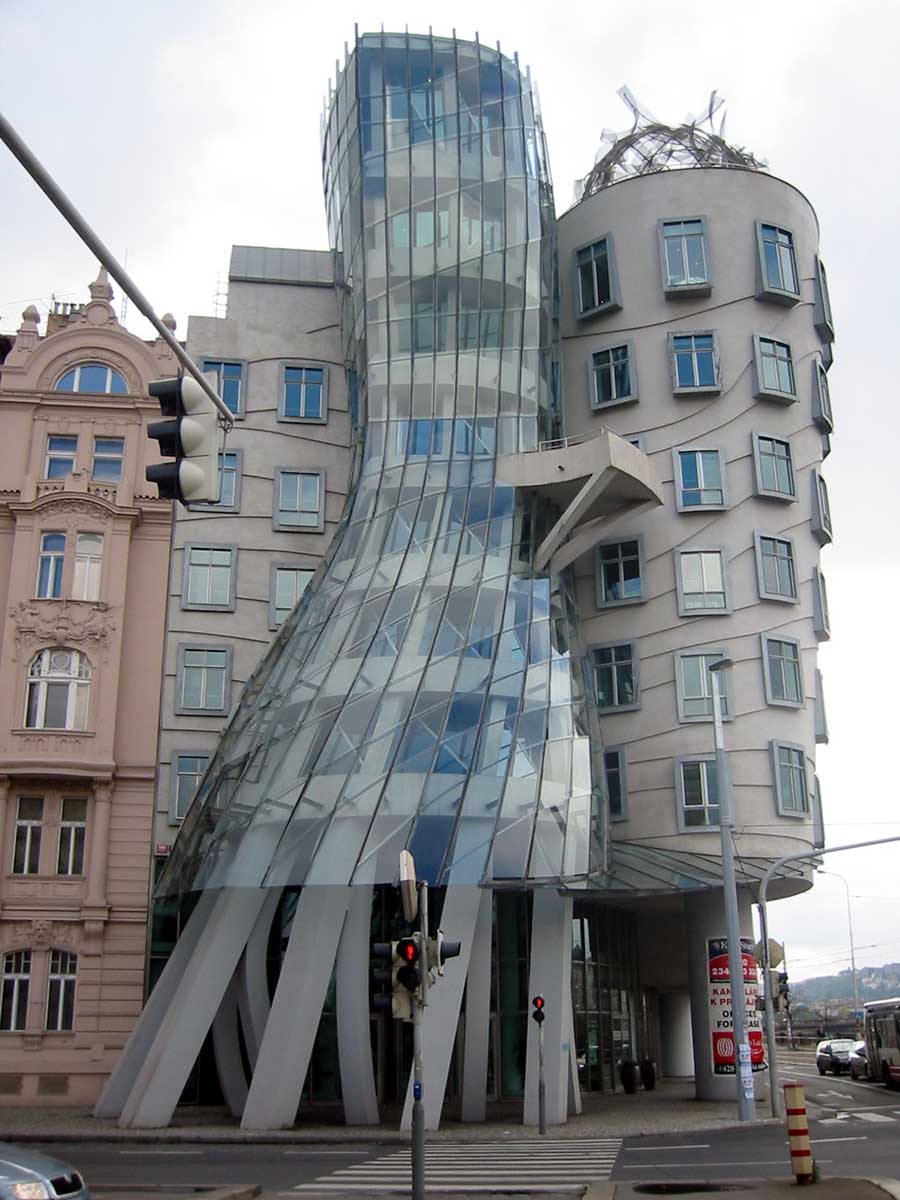
   The Dancing House (Czech Republic)

The Dancing House is the nickname given to an office building in downtown Prague, Czech Republic. It was designed by Croatian-born Czech architect Vlado Milunic in co-operation with Canadian architect Frank Gehry.The house stands out among the Neo-Baroque, Neo-Gothic and Art Nouveau buildings for which Prague is famous.

The Piano House (China)


This unique piano house was built recently in An Hui Province, China. The building displays various city plans and development prospects in an effort to draw interest into the recently developed area.

     Kansas City Library (United States)

Kansas City Library has one seriously cool facade. Local residents were asked to nominate influential books that represent Kansas city and the winning nominations were then used as the exterior of the library car-park.
                                    

         The Astra House (Germany)

The floors of this house can move up or down on it's skinny column core.As of now, the unique building has been destroyed.

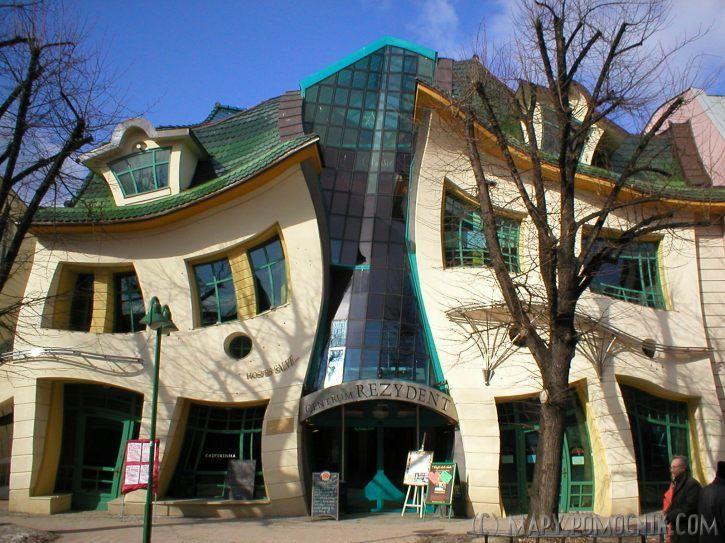
The Crooked House (Poland)

Szotynscy Zaleski, was inspired by the fairytale illustrations of Jan Marcin Szancer and the drawings of the Swedish artist and Sopot resident Per Dahlberg.This house is 4,000 square meter long.
WORLD'S SCARIEST BRIDGES

                           Millau Bridge, France

One of the world’s tallest vehicular bridges elevated 1,125-ft above the Tarn Valley in southern France is the Millau Bridge. Driving over this bridge has got to be one most thrilling experiences of a lifetime and not a ride for those afraid of heights or bridges! Just somewhat taller than the Eiffel Tower.

   Royal Gorge Bridge in Colorado, US

 The Royal Gorge Bridge in Colorado in the United States holds the record for the tallest suspension bridge in the world with its roadbed towering at 1,053 feet (321 meters) above the ground below. You can walk or drive this bridge, at approximately 1,270 feet long it makes for a breathless journey.

Carrick-a-rede Rope Bridge, Nortern Ireland


At just 20 meters long and 30 meters above the rocks near Ballintoy, County Antrim, Northern Ireland, The Carrick-a-Rede Rope Bridge swings to and fro as people walk across the terrifying rope bridge which links the mainland to the tiny Carrick Island. On a windy day, just hold on tight as this bridge will surely take your breath away and leave you fearful of heights for a lifetime to come.

     Hanging Bridge of Ghasa, Nepal


 The villagers in Nepal developed the Hanging Bridge of Ghasa, a very long and daunting suspension bridge, to help curb the traffic. This bridge is used by the locals and the animals on a daily basis so perhaps they are used to its unsteady and dilapidated state

            Aiguille du Midi Bridge, France

Fortunately, the bridge itself is short, making for an easy escape if acrophobia sets in. But those truly afraid of heights probably won’t even see the bridge; getting here requires taking a cable car that climbs 9,200 vertical feet in just 20 minutes.The bridge is 12,605 feet above sea level.


Thursday, January 13, 2011

UNDERWATER SCULPTURE

Jason de Caires Taylor’s underwater sculptures create a unique, absorbing and expansive visual seascape. Highlighting natural ecological processes Taylor’s interventions explore the intricate relationships that exist between art and environment. His works become artificial reefs, attracting marine life, while offering the viewer privileged temporal encounters, as the shifting sand of the ocean floor, and the works change from moment to moment.The experience of being underwater is vastly different from that of being on land.

There are physical and optical considerations that must be taken into account. Objects appear twenty five percent larger underwater, and as a consequence they also appear closer. Colors alter as light is absorbed and reflected at different rates, with the depth of the water affecting this further. The light source in water is from the surface, this produces kaleidoscopic effects governed by water movement, currents and turbulence. Water is a malleable medium in which to travel enabling the viewer to become active in their engagement with the work. The large number of angles and perspectives from which the sculptures can be viewed increase dramatically the unique experience of encountering the works.